Large scale tree trimming project update

Single Line Tree Care is expected to finish the project a day early.

Tree trimming work has moved faster than expected and Single Line Tree Care is expected to finish a day early. As a result, we need vehicles in the northwest guest parking location to be moved by Friday, 5/29/26, at 8 AM to facilitate the trimming of the large oak on the corner.

A final walk through will be performed with the company on Saturday morning. If you see a branch that is within 3 feet of a home or within 10 feet of a roof, please contact the Board of Directors with the location of the issue and preferably a picture.

Thank you for your help!

Oregon white oak tree health report – May of 2026

Oregon white oak tree health report for May of 2026.

Part of our agreement with Single Line Tree Care was not only to trim branches away from homes and roofs, but to evaluate the health of the trees in our community. Single Line Tree Care, along with the other four companies that provided bids, commented on the good health of the trees in the neighborhood.

The large Oregon white oaks in the southwest corner of the property were given extra attention by David D. Hunter, an ISA certified arborist and ISA qualified tree risk assessor, as Oregon white oaks are the same species of tree that fell in the southeast corner of the property in March.

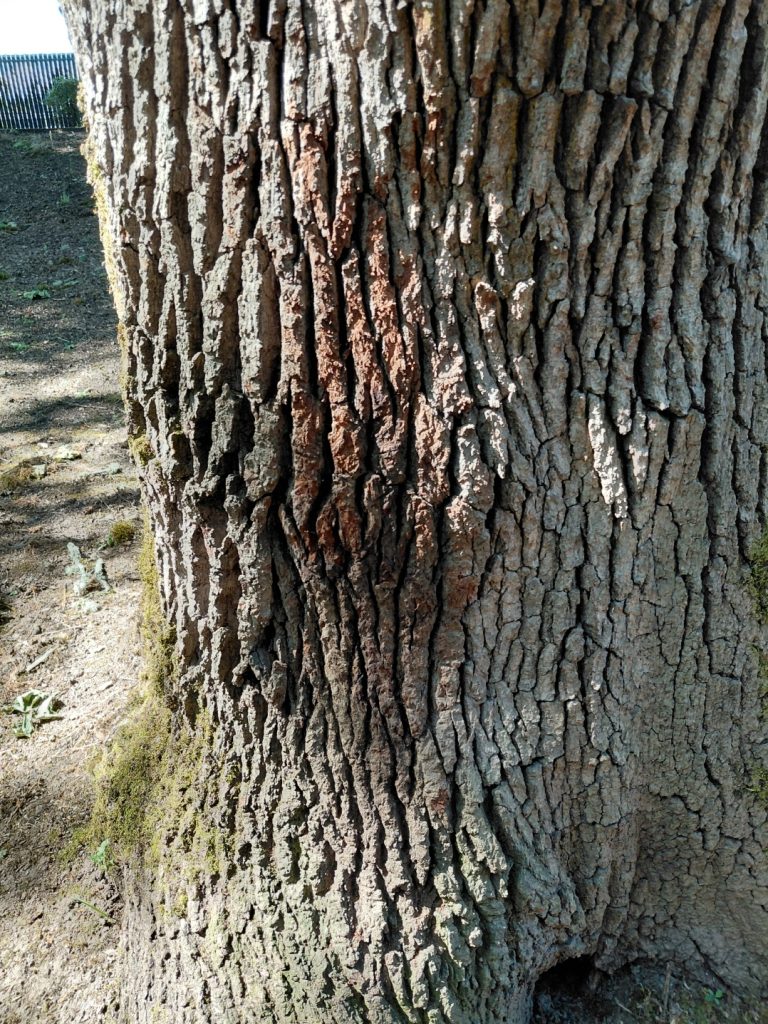
Hunter found no reason to cutdown any of the Oregon white oaks, but fungus (which was dead, see image below) was found on the white oak closest to 3087’s door. We need help from the community to monitor the fungus. If it comes back, the tree may need to be cut down.

Dead fungus found on Oregon white oak

When you are walking in the neighborhood or working in your yard please take a look at the trees in the area and if an issue is seen, please send an e-mail to the board. Catching an issue early could save a tree and/or prevent property damage.

Below are some tips to identify issues with Oregon white oaks.

  • Fungal growth at the base
  • Canopy dying
  • Peeling bark

The following are the notes made by Mr. Hunter who assessed the Oregon white oaks in the southwest corner of the property on May 14, 2026.

Two white oaks near 3151
#1 – white oak, back right corner. Tree was tested and probed – no issues, but needs to be monitored for significant die off over the years.

#2 – white oak, back center of house. Tree was tested and probed – no issues, but needs to be monitored for significant die off over the years.


Three white oaks on the side of 3084
#1 – white oak by mailbox cluster. Tree was tested and probed – no issues, but needs to be monitored for significant die off over the years.

#2 – white oak, small one in the middle. Tree was tested and probed – no issues, but needs to be monitored for significant die off over the years.

#3 – white oak near guest parking location. Tree was tested and probed – no issues, but needs to be monitored for significant die off over the years.


Cluster of white oaks near 3087
Three stem white oak near front door – This tree is the most concerning. Found wood rotting fungus on the bottom, but was dead. Tree was probed, went in about a foot and found no indication of rotting. Needs to be monitored for fungus and significant die off over the years.

All of the other white oaks were checked in the surrounding area and had no concerns except for large dead for safety above walking trail and school parking lot. Trees are healthy.

In the fall, need to check the base of the trees for fungus or mushrooms. Wood chips need to be 3-4 feet off the trunks of the trees as they can promote fungus growth and can hold water which can lead to root rotting.

Large scale tree trimming – May 27-30

Single Line Tree Care will be on-site May 27-30 for extensive tree work on the property. Vehicles will need to be moved to facilitate the work.

Single Line Tree Care will be on-site May 27–30, 2026, to perform extensive tree trimming throughout the community. Work is scheduled to take place between 8 AM and 4 PM each day.

To complete this work, crews may need access to backyards, driveways, guest parking, and all sides of homes. Please ensure that back gates are unlocked to allow entry to clean debris and branches.

In preparation, we ask that residents please:

  • Close all windows, doors, and garage doors
  • Secure or bring in pets
  • Move any temporary awnings in backyards
  • Remove or secure personal belongings from the work areas
  • Clear items away from the perimeter of your home
  • Store trash and recycling containers inside your garage (do not leave them in driveways or between homes)
  • Move any vehicles in the designated area(s) on the designated date according to the map below

These steps will help ensure the work is completed safely and efficiently.

Please note that work may move faster than expected and someone may knock on a door to move a vehicle.

Please contact the Board of Directors with any questions and visit RobinMeadows.com for updates.


Project map

On May 27, the work will begin in the southwest corner of the property, indicated in red on the map below. On the second day, May 28 (indicated in purple), the work will be in the south/southeastern part of the property. On day three, May 30, the work (indicated in brown), will be in the central and eastern part of the property. On the fourth day, May 30 (as indicated in blue), the work will be in the north part of the property.


Why this project now?

  1. With the roofs being replaced in 2025 it is important to protect our investment. Roofing professionals consistently highlight two key practices for extending the life of a roof: keeping debris off shingles and regularly trimming back overhanging tree branches.

  2. Trimming branches back prevents pests such as squirrels from getting on the roof and possibly in the attic.

  3. Trimming branches back results in less debris in gutters allowing the gutters to do its job.

  4. In March of 2026 a large white oak fell in the southeast corner of the property, Fortunately, no one was injured nor any property was damaged, but it was a wake-up call that it is time to have a professional evaluate the trees in our community.

Goals for the project

  1. Trim branches that are within 4-6 feet of buildings and roofs

  2. Trim branches that are within 10 feet above roofs

  3. Trim branches that are lower than 8 feet over walkways

  4. Trim branches that are lower than 14 feet over roadways

  5. Have an ISA professional evaluate the health of all trees in the community
  6. Develop a sustainable budget and 20-year plan to take care of the trees on the property. (The 2025 reserve study has just $3,269 allocated in 2029 which is woefully under budgeted.)

Trees in backyards

As a reminder, trees located in backyards are the responsibility of individual homeowners to maintain. To help protect your roof, siding, gutters, and fencing, the recommended clearance is 3 to 8 feet between tree branches and your home’s structure and 10 feet above roofs. The HOA is not responsible for any exterior damage caused by untrimmed trees in a homeowner’s backyard. A homeowner’s backyard is not a common area and therefore not the responsibility of the HOA.

If the HOA observes trees affecting the exterior of the home, but is not in a common area, a letter will be sent to the homeowner to take care of the trimming of the tree. If there is no action, the board will hire a company to trim the tree(s) and charge the homeowner’s account for the work.

If you’re unsure how to proceed or need assistance, we encourage you to connect with neighbors or contact the board.
Small tree trimming project is complete

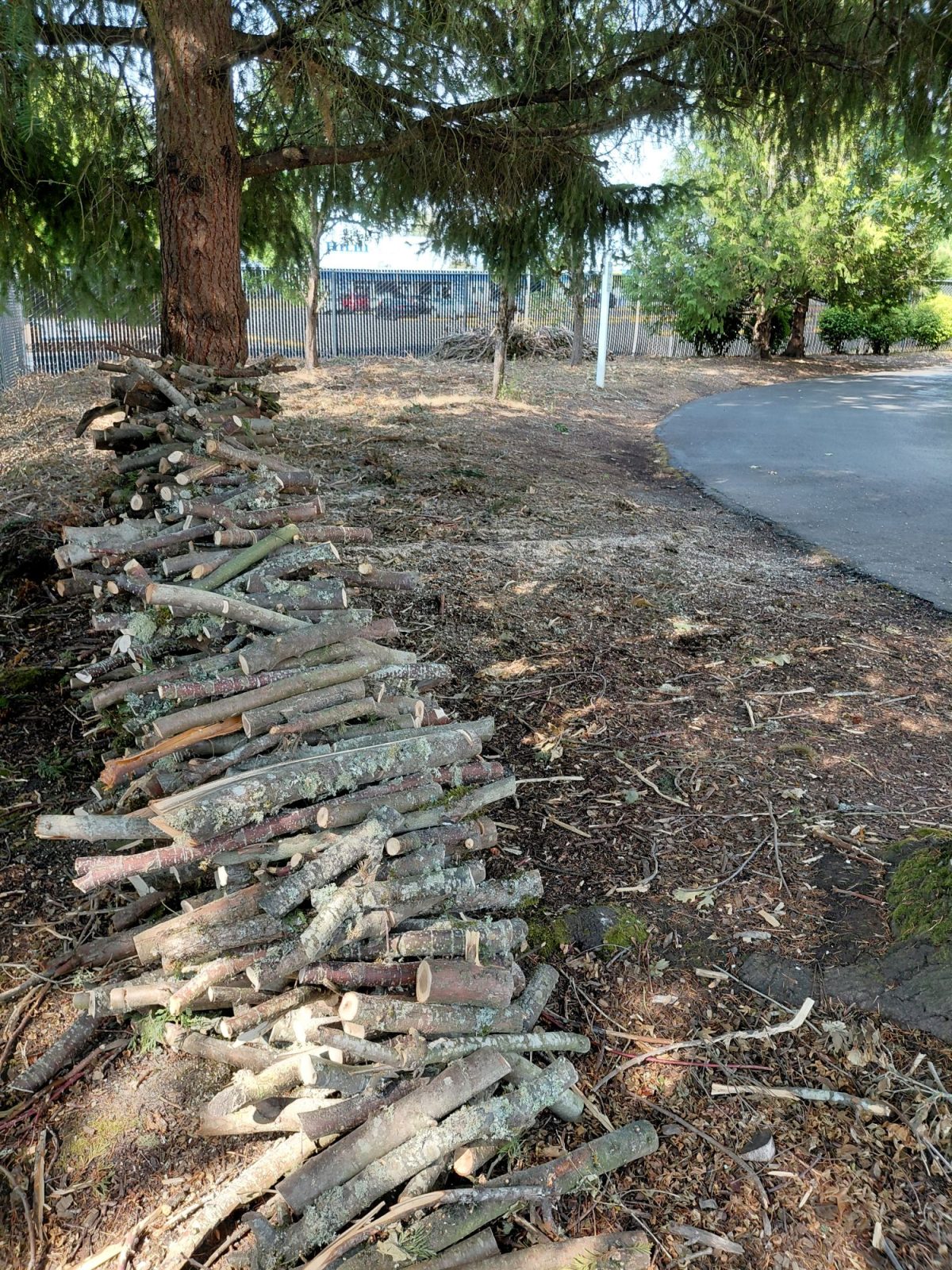
Small tree trimming has been done.

For the second consecutive year, a small group of volunteers trimmed branches away from homes and over roofs. This yearly maintenance reduces the risk of moss growth and debris on the roofs – two factors that affect the longevity of the roofs.

A big thanks to Kathy N. and Dan N. for their time and work. This annual project has already saved over $17,000 in two years while helping to reduce the risk of property damage.

If you see a branch that we missed, please contact the board with the location and a picture of the issue so we can take care of it.

As a reminder, trees located in backyards are the responsibility of individual homeowners to maintain. To help protect your roof, siding, gutters, and fencing, the recommended clearance is 3 to 8 feet between tree branches and your home’s structure. The HOA is not responsible for any exterior damage caused by untrimmed trees in a homeowner’s backyard. A homeowner’s backyard is not a common area and therefore not the responsibility of the HOA.

If the HOA observes trees affecting the exterior of the home, but is not in a common area, a letter will be sent to the homeowner to take care of the trimming of the tree. If there is no action, the board will hire a company to trim the tree(s) and charge the homeowner’s account for the work.

If you’re unsure how to proceed or need assistance, we encourage you to connect with neighbors or contact the board.
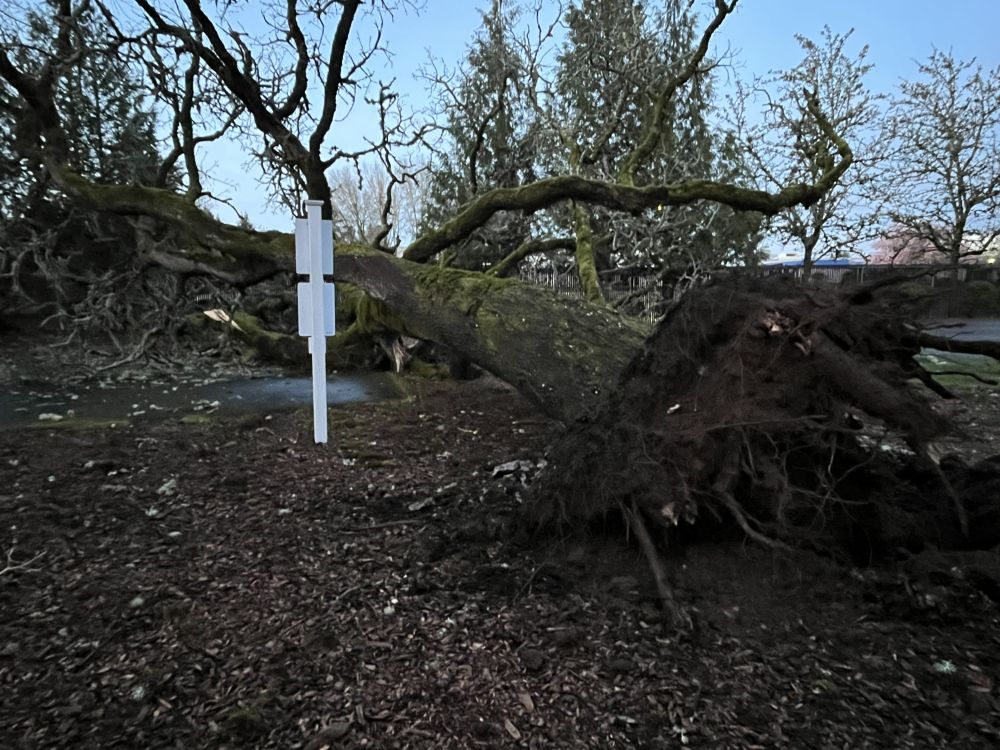
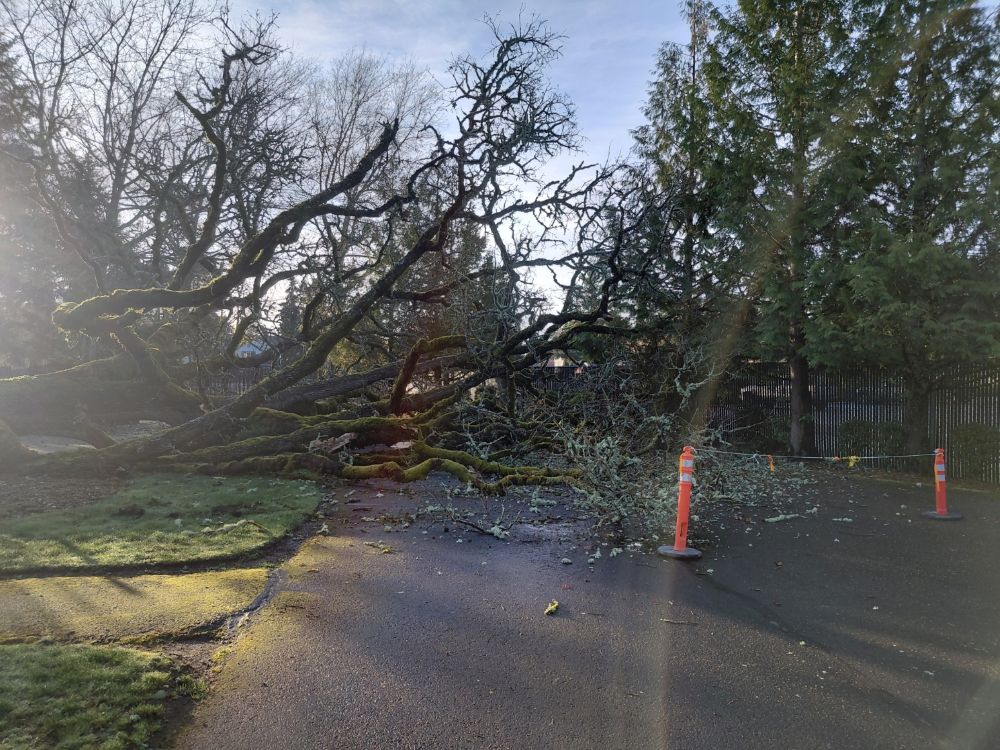
Tree down in southeast corner of property

A tree has fallen in the southeast corner of the property blocking the road.

We want to make residents aware that a tree has fallen and is currently blocking the roadway within the community in the southeast corner of the property. The HOA has been notified and is already in the process of arranging for its removal.

We are working with a company to have the tree cleared as quickly as possible. In the meantime, we ask residents to please avoid the area and use caution when traveling nearby.

1:35 PM update: Single Line Tree Care will begin cutting the tree at 8:30 AM on Sunday, 3/15/2026. Please avoid the area and do not interfere with the workers.

Oak Tree Removal – Temporary Road Access Impact (Jan 12–13)

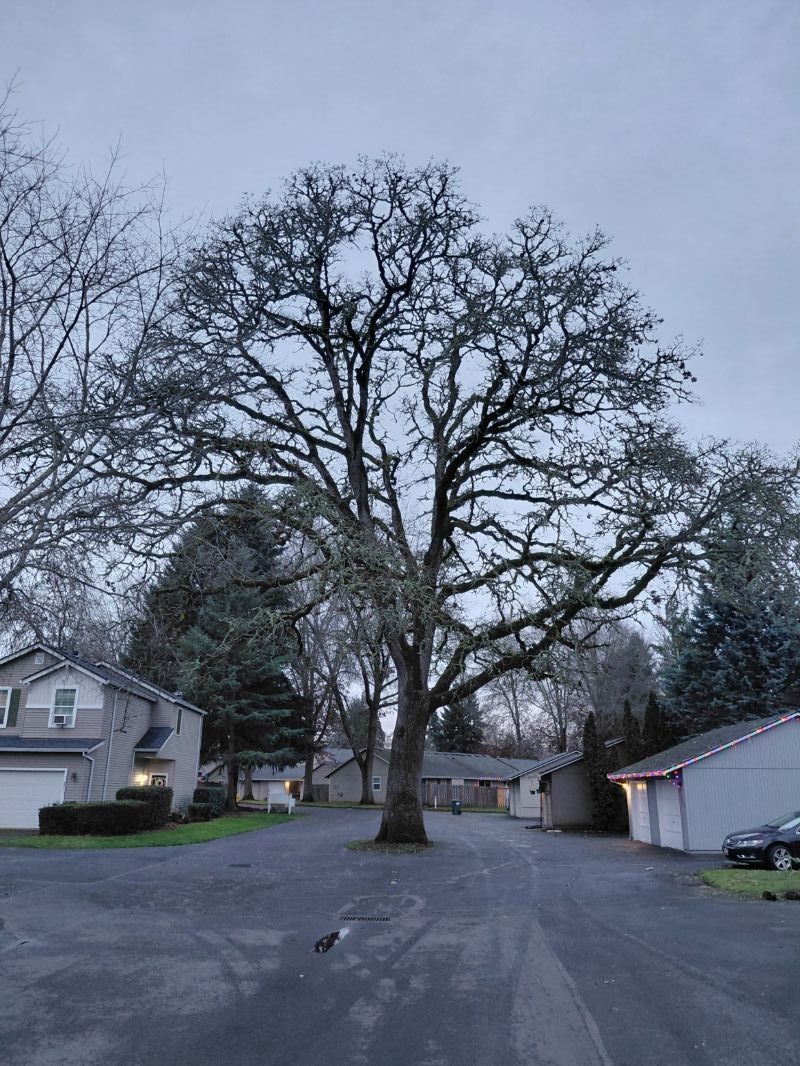
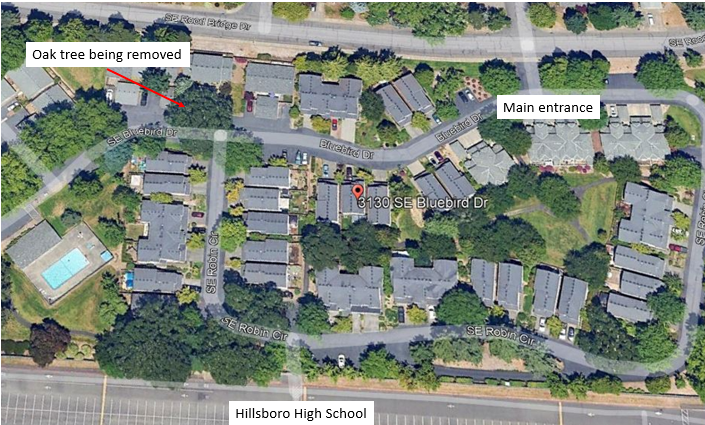
The Rood Bridge Townhouse HOA has scheduled the removal of the large oak tree located in the center of the roadway on the west side of the property. After evaluation, the arborist recommended removal due to ongoing rot at the base of the tree, which poses a safety concern.

What to Expect:

  • Temporary impacts to vehicle access through this area for up to two days
  • Equipment and crews will be working in and around the roadway
    • Short-term delays or closures may occur during active removal

Important for Nearby Homes:
Homes in the immediate area where the tree overhangs or is near driveways should move vehicles in advance to avoid access issues or potential damage.

We appreciate everyone’s patience and cooperation as we support Rood Bridge Townhouse’s work to ensure long-term safety in the community. Additional updates will be shared if the schedule changes.

Map of where oak tree is being removed.

Tree trimming project is complete

Spring/early summer tree trimming project is complete.

The tree trimming project is complete. A big thanks to Dan N., Kathy N., Randy M., Shawnna A., Torrance N., and Victor R. for their time and work. This extensive project took over two months and was completed to protect the life of the new roofs. This project was completed at a significant savings—easily over $15,000 in labor costs—while helping reduce the risk of future property damage. Our goal is to make tree maintenance manageable, sustainable, and cost-effective over the long term.

It’s important to note that our original roofs lasted over 20 years, largely because the trees were younger and smaller at the time. Today, many of our trees are mature and significantly larger, which means roof care requires ongoing attention. If we want our new roofs to enjoy a similar lifespan, we must remain vigilant.

Roofing professionals consistently highlight two key practices for extending the life of a roof:

  1. Keeping debris off shingles
  2. Regularly trimming back overhanging tree branches

These actions help prevent moss growth—a common cause of roof deterioration and leaks. By staying proactive with tree maintenance, we’re investing in the long-term durability of our homes.

In 2026, the board hopes to have enough funds to hire a tree company to trim back the large branches hanging over roofs around the neighborhood.

As a reminder, trees located in backyards are the responsibility of individual homeowners to maintain. To help protect your roof, siding, gutters, and fencing, the recommended clearance is 3 to 8 feet between tree branches and your home’s structure. The HOA is not responsible for any exterior damage caused by untrimmed trees in a homeowner’s backyard. A homeowner’s backyard is not a common area and therefore not the responsibility of the HOA.

If you’re unsure how to proceed or need assistance, we encourage you to connect with neighbors or contact the board.
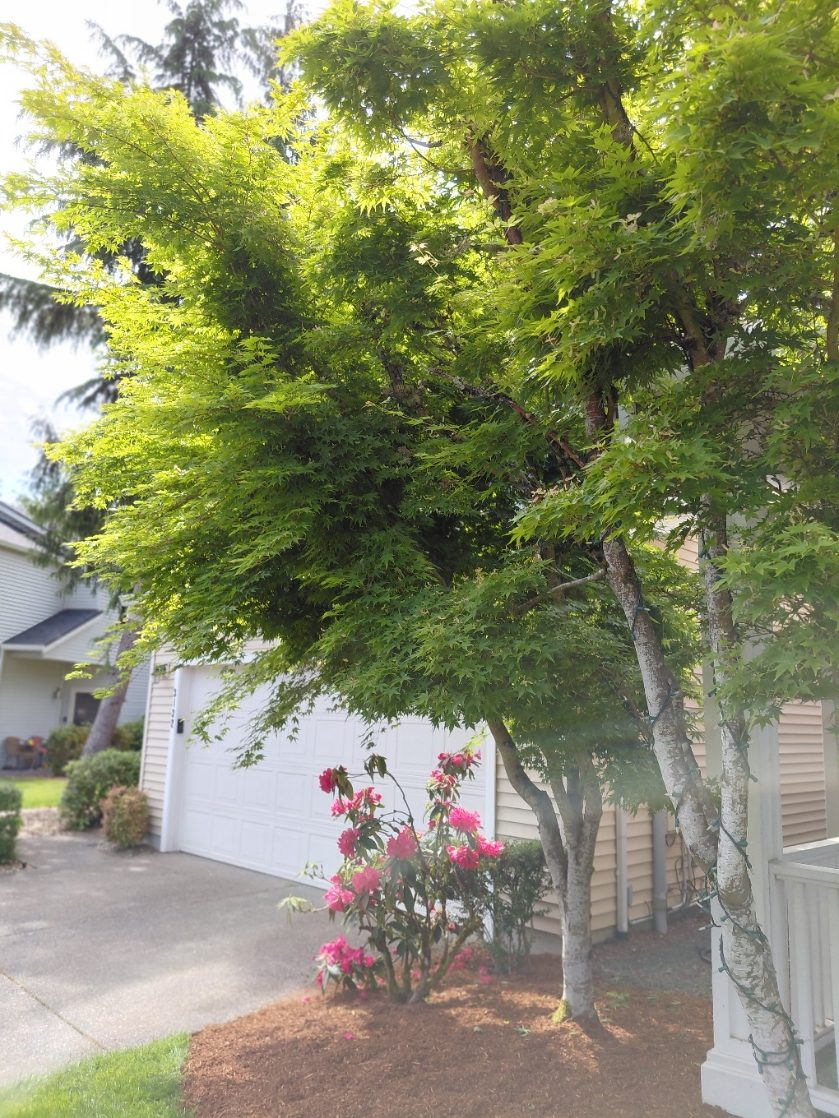
Tree trimming project update

An update on the neighborhood tree trimming project.

To help safeguard our new roofs, prevent damage to our siding, gutters, and fences, and reduce the chance of pests getting into attics, a group of volunteers recently completed a comprehensive tree trimming project throughout the neighborhood. This project was completed at a significant savings—over $15,000 in labor costs—while helping reduce the risk of future property damage. Our goal is to make tree maintenance manageable, sustainable, and cost-effective over the long term.

It’s important to note that our original roofs lasted over 20 years, largely because the trees were younger and smaller at the time. Today, many of our trees are mature and significantly larger, which means roof care requires more ongoing attention. If we want our new roofs to enjoy a similar lifespan, we must remain vigilant.

Roofing professionals consistently highlight two key practices for extending the life of a roof:

  1. Keeping debris off shingles
  2. Regularly trimming back overhanging tree branches

These actions help prevent moss growth—a common cause of roof deterioration and leaks. By staying proactive with tree maintenance, we’re making an investment in the long-term durability of our homes.

Moss on roof

Moss on a roof caused by branches overhanging the roof

Since 2020, the HOA has spent over $20,000 on tree removals related to infrastructure and safety concerns—such as buckling pavement and interference with utility lines. Unfortunately, several large trees still pose risks and will need to be professionally removed in the coming years for similar reasons. Looking ahead, hiring a certified arborist to trim large branches overhanging homes will be a priority project for 2026.

As a reminder, trees located in backyards are the responsibility of individual homeowners to maintain. To help protect your roof and siding, the recommended clearance is 3 to 8 feet between tree branches and your home’s structure. If you’re unsure how to proceed or need assistance, we encourage you to connect with neighbors or contact the board.
If you’d like to help reduce future costs and contribute to the community, please reach out to the board to learn how you can get involved.